
Sometimes the simplest things work best.
In hospitality, we often overcomplicate training. We create wordy manuals no one reads, overloaded onboarding plans, and endless explanations that sound good but rarely stick. Yet one of the most effective formulas for developing confident, capable people is surprisingly simple:
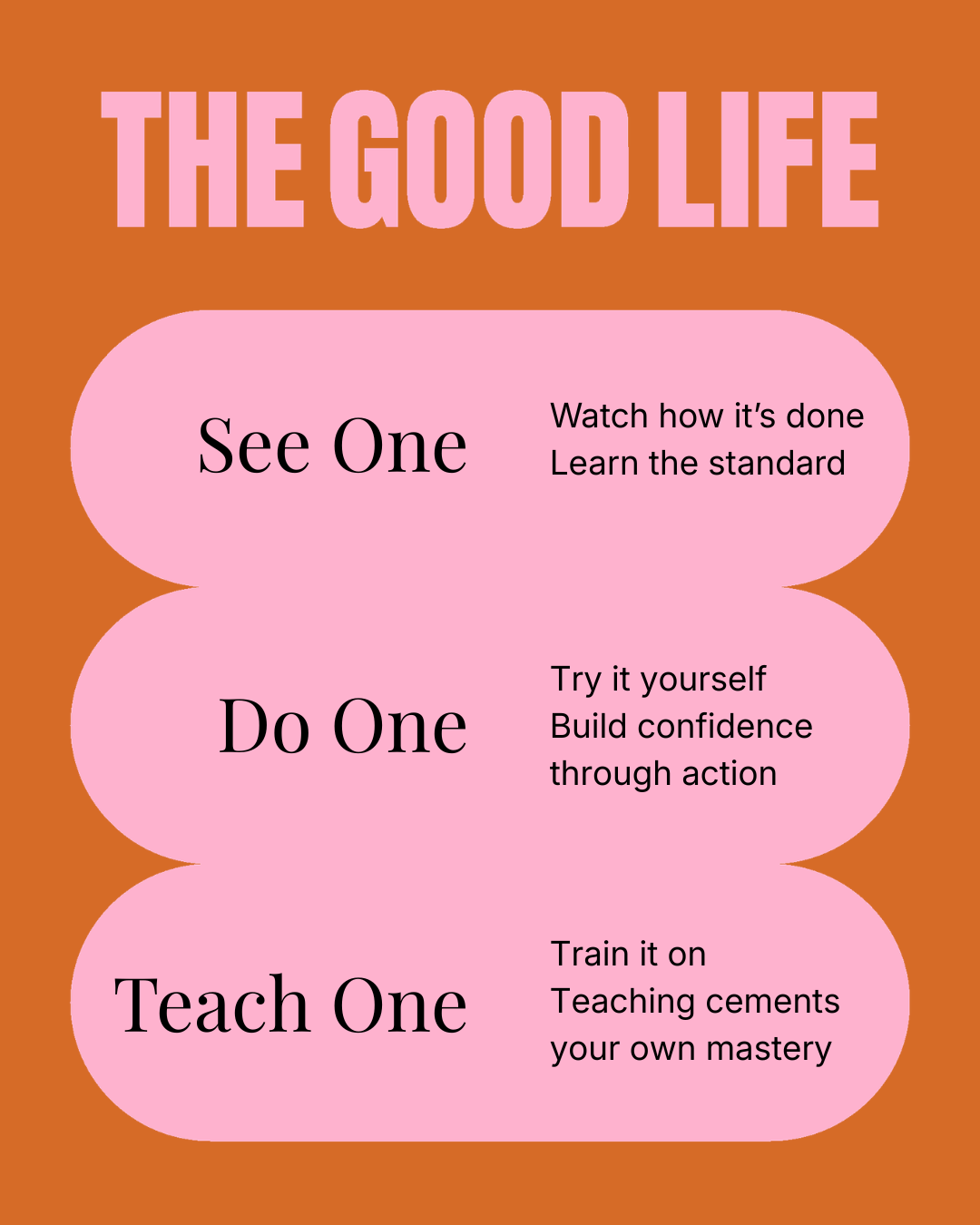
See one. Do one. Teach one.
Why? Because it works with how the brain actually learns.
Think of the brain like a forest. Learning happens by building neural pathways - routes between brain cells that strengthen through use. The first time someone we see a new task, whether it’s dialling in coffee, handling a difficult guest interaction, or leading a briefing, the route pathway is weak. “See one” is just the start.
Real learning happens when someone “Does one.” Practising, trying, stumbling, adjusting, repeating - this is what strengthens those pathways through neuroplasticity, the brain’s ability to adapt and reorganise through experience. Repetition matters. It’s like walking the same path through a forest again and again — what begins as barely visible undergrowth gradually becomes a clear, well-worn trail. The more we practise, the stronger those neural pathways become. And confidence isn’t built through explanation alone; it’s built through action.
Then comes the magic step: “Teach one.”
Teaching forces people to retrieve knowledge, explain it clearly, and apply it in real time. It cements understanding. If someone can teach a skill to a new starter or coach a colleague through a challenge, that learning becomes embedded.
Over time these 3 steps make behaviours smoother, faster, and more automatic. This is how habits form and standards become consistent across teams.
So next time you’re developing someone on shift, keep it simple:
See one.
Do one.
Teach one.
Where could this formula make training easier and more effective in your team?
